WCW – Paul Muldoon

Wednesday, June 3, 2015, 7 p.m.

Williams Center for the Arts
One Williams Plaza, Rutherford NJ

Plus the words of William Carlos Williams
and open readings from the floor

Contact: John Barrale – john.barrale@gmail.com

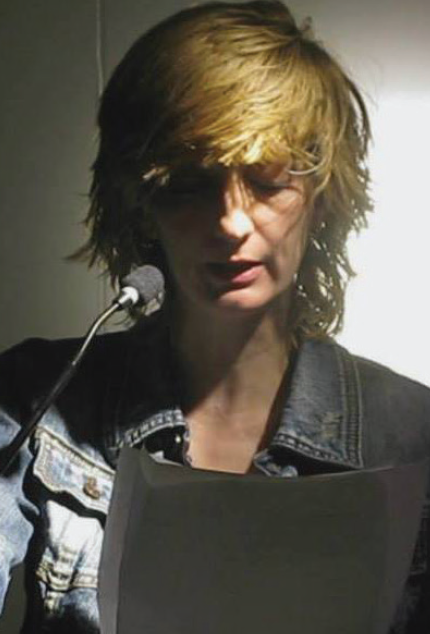
Paul Muldoon is the author of twelve major collections of poetry, including One Thousand Things Worth Knowing (2015), Maggot (2010), Horse Latitudes (2006), Moy Sand and Gravel (2002), Hay (1998), The Annals of Chile (1994), Madoc: A Mystery (1990), Meeting the British (1987), Quoof (1983), Why Brownlee Left (1980), Mules (1977) and New Weather (1973). Muldoon served as Professor of Poetry at Oxford University from 1999 to 2004. He has taught at Princeton University since 1987 and currently occupies the Howard G.B. Clark ’21 chair in the Humanities. He has been poetry editor of The New Yorker since 2007. Paul Muldoon is a Fellow of the Royal Society of Literature, the American Academy of Arts and Sciences and the American Academy of Arts and Letters. In addition to the Pulitzer Prize, he has received an American Academy of Arts and Letters award in literature, the 1994 T. S. Eliot Prize, the 1997 Irish Times Poetry Prize, the 2003 Griffin International Prize for Excellence in Poetry, the 2004 American Ireland Fund Literary Award, the 2004 Shakespeare Prize, the 2005 Aspen Prize for Poetry, and the 2006 European Prize for Poetry. He has been described by The Times Literary Supplement as “the most significant English-language poet born since the second World War.”

Your giving poverty a try
has hit another snag
since you stopped off in Shanghai
and bought three Kelly bags
and now you claim a Birkin’s
prohibitively dear
I hear you baby
I hear you loud and clear

WCW – Amy King

Amy King

Wednesday, May 6, 2015, 7 p.m.

Williams Center for the Arts
One Williams Plaza, Rutherford NJ

Plus the words of William Carlos Williams
and open readings from the floor

Is it possible to write something visceral by distorting grammar into a new language? Find out at May’s Williams Reading, when the Red Wheelbarrow presents Amy King, our featured poet for the month. From such a successful poet, you might be surprised to hear such daring and challenging work.

Of I Want to Make You Safe (Litmus Press), John Ashbery describes Amy King’s poems as bringing “abstractions to brilliant, jagged life, emerging into rather than out of the busyness of living.” Safe was one of Boston Globe’s Best Poetry Books of 2011. King teaches Creative Writing at SUNY Nassau Community College and serves on the Executive Board of VIDA: Women in Literary Arts.

King joins the ranks of Ann Patchett, Eleanor Roosevelt, Rachel Carson and Pearl Buck as the winner of the 2015 WNBA Award (Women’s National Book Association). She was also honored by The Feminist Press as one of the “40 Under 40: The Future of Feminism” awardees, and she received the 2012 SUNY Chancellor’s Award for Excellence in Scholarship and Creative Activities.

Contact: John Barrale – john.barrale@gmail.com

Your mouth is full of noise and I live the anomaly.
That’s why I’m currently drinking. And making more
fuckworthy art. Because the rest is truly useless.
I cut myself and no one will recall the time the poet cut
her flesh or ripped her heart’s skin to tell them something.
Our limits may not be expandable, but before you say,
“Blood and sinew,” remember you’re making a mistake.
We are not edges of limbs or the heart’s smarts only.
We are kiss times kiss with tree-lined lungs
(yes, we are the fucking trees) that sprout with purveyors
of knowledge

RWB Workshop Poem of the Week – April 15, 2015

John Barrale

Cat in the Moon

The moon is curled up in the sky.
Tonight she is African, a leopard
with a tail of clouds.

I detect a smile on her golden face.

Is it because she knows
I’d leave it all for her?

Sexy cat. I smell rain.
Your cloud tail swishes yes.
Let’s get wet and romp
in the night sky jungle.

Are you hungry?

One by one and real slow,
I can feed you the small animals
that hide in my soul.

* * *

The Cat in the Moon wakes me
by reaching under the covers
and wiggling my toe.

Let’s hunt, she purrs.

I take her paw
and slip like a ghost
through the grass.

We catch and eat ten mice.

Now you know where the little ones hide,
she says.

In the morning, I remember everything
and regret nothing.

* * *

She is so bright, just to look at her
makes my eyes hurt.

Unhurried, she hunts me.
I am the mouse cut cold.

Her paws
fill the night.

Blog – https://redwheelbarrowpoets.wordpress.com
Facebook – https://www.facebook.com/RWBPoets
Twitter – http://twitter.com/RWBPoets

GV – A Look at Neptune and a Jack Bruce Tribute

The Magic Circle returns to GainVille Café in Rutherford, NJ on Friday, April 24 for the launch of ANTON YAKOVLEV’s new book of poetry Neptune Court.  Anton has a poem forthcoming in The New Yorker and has been published in The Rutherford Red Wheelbarrow, Instigatorzine, and other publications.

Our musical feature will be a tribute to the late great bassist JACK BRUCE, by frequent Magic Circle performer VICTORIA WARNE (The Victoria Warne Band) and poet/musician MARK FOGARTY, plus special guest CATHY VITA and a Victoria original written to be debuted this evening! .

The Red Wheelbarrow Poets’ Bring-Your-A-Game open mic will follow, with generous reading times.

17 Ames Ave, 7 PM.
$7 donation includes coffee/tea and dessert.
(201) 507-1800

WCW – Matthew Rohrer

Matthew Rohrer

Wednesday, April 1, 2015, 7 p.m.

Williams Center for the Arts
One Williams Plaza, Rutherford NJ

Plus the words of William Carlos Williams
and open readings from the floor

MATTHEW ROHRER is the author of several books of poems, most recently DESTROYER AND PRESERVER, published by Wave Books, and SURROUNDED BY FRIENDS, forthcoming in April 2015. His poems have been widely published and anthologized, and he is the recipient of the Hopwood Award, and a Puschcart Prize, among others. He lives in Brooklyn and teaches at NYU.

Contact: John Barrale – john.barrale@gmail.com

The model farm is therapeutic.
The 4-horned sheep
has all manner of things
clinging to his wool.
The cow is not angry.
None of the goats are daunted.
My daughter steps into the gravel
near a puddle and leaves a hole
that quickly fills
with water and sees this
and does it again.
On the way out
of one of the buildings
art students have posted
their pencil drawings
of the animals and they
are so accurate
we stop walking.

Is this—Sir—what you asked me to tell you?
Emily Dickinson

GV – Marisa Frasca and Lisa Bianco

A NEW BOOK AND OUR FAVORITE ROCKER OF ALL TIME!

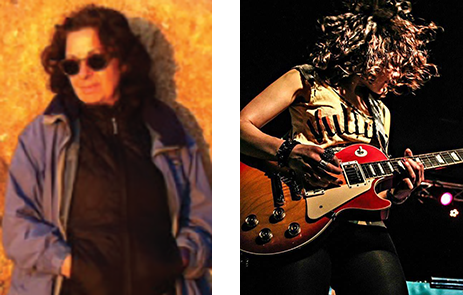
The Magic Circle returns to GainVille Café in Rutherford, NJ on Friday, Feb. 27 for poet MARISA FRASCA reading from her new book Via Incanto: Poems from the Darkroom. Opening for Marisa will be our favorite rock and roller LISA BIANCO. Marisa’s book, from Bordighera Press, features poetry inspired by her early years in Sicily and more recent years in America. Lisa is just back from doing the annual Light of Day fundraiser with Bruce Springsteen and Willie Nile, and has done two national tours with her new band, Hunter Valentine.

The Red Wheelbarrow Poets’ Bring Your A Game open mic will follow, with generous reading times.

17 Ames Ave, 7 PM.

$7 donation includes coffee/tea and dessert.

(201) 507-1800.

WCW – Judith A. Christian

Wednesday, March 4, 2015, 7 p.m.

Williams Center for the Arts
One Williams Plaza, Rutherford NJ

Plus the words of William Carlos Williams
and open readings from the floor

Judith A. Christian is an editor and poet. She is formerly President of South Mountain Poets, workshop leader, and editor of the anthologies Gathered on the Mountain, The Final Lilt of Songs, and Off Line (South Mountain-Watchung Poets, 2006, 2008, 2010). Her poems appear there and in The Stillwater Review and Voices From Here (Paulinskill Poetry Project, 2009). Her haiku “rising from your bed” is the subject of an essay in The Haiku Aesthetic by Jean LeBlanc (Cyberwit, 2013). She is a long-time student of Buddhist philosophy and continues to receive teachings from exiled Tibetan monks and the scholarly descendants of the first Lama to bring Tibetan Buddhism to the United States. After leaving a career in technical publishing two decades ago, she has worked a series of part-time jobs, most recently, in a grocery store.

Contact: John Barrale – john.barrale@gmail.com

Who puts purple with green
is no one, yet it is done again on the ivy
in a mottled array maybe more maroon
than purple. Who shot the deer
for the ivy to return is no one.

In a dream I am telling you this
no one sitting beside a tangle
of stems of Russian sage
as white as the coming and going
of everything as light.

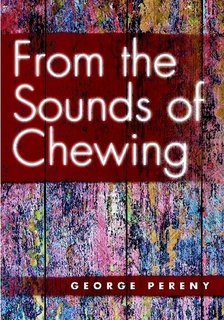
The Sounds of Chewing, by George Pereny

Join the Red Wheelbarrow Poets at the book release party for

GEORGE PERENY’s From the Sounds of Chewing

GainVille Café in Rutherford, NJ, Friday, Jan. 30, 7AM, 17 Ames Ave

Here is the introduction to the book, written by Jim Klein:

George Pereny is the real shit. That may seem a strange way to begin the Introduction to From The Sounds of Chewing, but I have my reasons. First, I’ve known George ever since the fall of 1975 when I started teaching English at Fairleigh Dickinson University, Rutherford, and George was doing grad work there. I might as well reveal my biases at the top. More important, I think if a book of poems is any good, at the deepest level the reader falls in love not with any poem or three but with the poet’s voice, and ultimately with the poet himself. I’ve had the habit of turning down the corners of the pages on poems I liked. It’s often happened that I go 20 or 30 pages unmoved, and then a poem hits me, and another, and I’m turning down a lot of corners and falling for the poet.

George’s voice is as clear and pure as George is. He’s had the experience all right, but his voice is natural and innocent. Songs of Innocence and Songs of Experience, George actually combines both. The apparent effortlessness of his work even gets me thinking back to the Aeolian harp, the Romantic image of inspiration caused by the wind blowing through the mountains. George has distilled the complexities of who he is, and was, and yearns to be into the verse testimony you have in your hand.

An immigrant kid from Hungry who first landed on a Pennsylvania farm where his family did chores, George went to high school in Bayonne. When he first came to Rutherford on a band gig in his senior year, he concluded he was in the country. He knew Springsteen in those days, so he set out on his lifelong journey to be a rocker. At Fairleigh, he made friends with Carole King’s lyricist husband Gerry Goffin, who was in his chemistry class to learn to make LSD. Once, he showed George the back door where the words came to him: Looking out at the falling rain// I used  to feel so uninspired.

The FDU literary magazine before I got there was called The Prelude, no doubt a Brit envy affectation, it was printed in green ink. I found a box of them in the attic of the English building and decided to do a literary magazine that was different in every way from The Prelude. We called it lunch because I was brown bagging it one day and throwing the bag behind my back and catching it in one hand going to the café with Geoff Nulle. Why don’t you call it lunch, Geoff said? We mimeographed it and gave it away. We had so much fun after the first issue we did another one three weeks later: students, non-students, faculty, staff and finally, people in the city and across the country began participating. We had readings nearing 100 at times that went on for hours, no doubt aided by the beer.

I go on like this because George tells me I am his teacher or mentor, and I don’t ever remember working on any of George’s poems or having him in class. I think what he means is that he’s a Jersey boy who cut his teeth on verse influenced by the animal spirits that swirled around the beginnings of lunch, a largely male and raucous scene miles removed from the prettified versings of most literary magazine.

George got a job at Passaic Community College and a few other places. At PCC, he wanted to start a literary magazine. He asked me what to call it. I said “let it come to you as you go, organic.” He called it Footwork. Finally, George got the call to teach in the Bronx. His book Homeslice chronicles those nearly forty gritty years on an almost daily basis. He became Grand Master P to his students and taught English and life in rap and by example, and broke up hundreds of fights, at times getting injured, some as the Dean of Students, commuting  two hours each way every day and during the summer as well.

In his spare time, he played drums and guitar and wrote and published numerous songs and CDs. Weekends, he was MC at the Bower Poetry Cluband Yippie Museum as the Electric Poet. George has always been a student of the martial arts, and he recently won a tournament against a much younger opponent despite having developed Parkinson’s. George has been married to his Mary Ann all these years, and they have raised three kids. He is devoutly religious and attends Mass daily. Vito told me he’s a tither and teaches Sunday School. A tither! Just saying.

Those of us who know George know that he is an amazing dude who really would give you the shirt off his back. All of which means nothing if it wasn’t apparent in every poem he writes. George knows who he is. He doesn’t want to be anybody else. He knows how his instrument sounds and what to do with it. He sure doesn’t sound like anybody else. All that singing and rhythm and kata and innocence and belief comes out in beautiful, heartfelt, monkeyshine poems.

The amazing thing about From The Sounds of Chewing, what a title, is that these are early, early poems. This is a callow, girl-crazy, overworked and underpaid, drug-addled George, emphasis on girl-crazy. It’s all good. Painters are told to hang onto some of their early work because they are doing things there they can’t do later. It shows where they came from. I watched an Antonioni movie last night on Netflix called The Story of a Love Affair. It’s a genre thing without much of a story and almost no end, but there are really amazing scenes in it and interesting bits all along. This young George is really a piece of work too.

He’s got me on the first page, “Fear.”  “When I was a little kid in Budapest// I saw my friend tied to a post//and whipped by his retarded dad.” The poem goes on to tell how  George had a little clown with a steel ball on the bottom to make it stand. He was throwing it around the house, and his mother warned him not to hit their new clock “right there dead in my aim eye.” Right there, we’re with him in childhood. Of course, he hit the clock with his clown, and now he’s terrified that his father will come home. George can make a great line out of anything. “Ocean” has him letting the water “engulf me in her tender cream.”

I’ve always remembered one of George’s big hits from Lunch days.

Tuba

golden tuba in a field of green

sun cascading off its liquid bronze

and sweeping the grass with reflections.


from darkness melted light:

the earth out sprang a man

to gaze at tuba

inside

outside

all around—


Of course, girls. In “With Me” he awakes “to the call of darkness// to bleed the she-wolf in the park//make the blond in the dark//and go// back to your cave// laughing.” Later in the poem, “And the river slides//between the thighs of the land;// the building stares vaguely//at the potent skies;// the wind is whipped by the revolt of trees// and I am here//and you are here// with me.” In “London,” it’s “The Wolf and the Deer.” “I chased and I caught you// chewed through your neck//and licked the warm  blood from my whiskers// after my// meal . . . .”

He’s not always so potent. In “White Orchestra” Marcia is “Sitting in my dirty car// I can feel her Spanish passion. // We hardly talk// we understand.// Her attitude is//maybe// and I go to her too soon.” In “I Must Bury the Cat” he realizes that though he loves Diane and has said so, he can’t “marry your two kids and ex-husband.” His regret gets mixed up with a dead cat he finds on the sidewalk and, being George, he knows he must bury it in his backyard, at the same time “praying for strength to follow the advice of good friends//concerning you.” Writing the poem on a “lonely Sunday afternoon in dirty East Rutherford,” he imagines her on the beach in a black bikini.

In “Freedom,” he’s running from the Kearny cops and hiding in a girlfriend’s house. “[Y]our mother’s breast embrace was comfort// and your children wanted me to stay.” What do you say about this hilarious, moving guy? “Dents” is about a dent in the left door of a new red Cadillac. “You saved all your money and after I couldn’t marry you// it became your new love and now it’s dented and I’m sorry.”  He’s dented, she’s dented, and he’s sorry. Not me. I’m loving it.

“A Prayer” is for a fly on his table, and of course for himself. “Hey Joe, Where Ya Going//With That Weapon in Your Hand” combines Joe Christmas in Faulkner’s Light in August and “Hey Joe” performed by Jimi Hendrix. Joe, you little sick speck! // If only the digit of God could have flicked you right. //[H]ey Joe where ya going with that weapon in your hand?

George goes where his heart takes him, even where few poets would dare go.

You Woman

When I’d look the way you’d want

I’d see you glance at me

in a flash of hot desire.

I loved you fat

would kiss your varicose veins for healing

but you’d complain when I was dirty

whiskers and bad breath would bother you

while I loved the ugly hair on your unshaved thighs—


so who love more?

you woman?


We were all young once, and a lot of lunch poets were as crazy as George used to be. I was. Somewhere in this book he has a line about J.K. having a “nervous breakdown. I guess George liked me so much he was driven to euphemism. When I was asked to write this introduction, my mind flew to one of my favorite memories of George. It was a hot August morning. I was in bed, and just woke up with the wrong girl next to me. I said so and she was pissed and we were in kind of a fight, that is she was biting down on my left thumb so hard I couldn’t get it out. I was in pain. Just then George yelled, “Hey, Klein. I’ve got something for you!” I looked just as he heaved a big blue fish over my window sill.

Just then I thought maybe George is right about all his God stuff.

He had just saved me from something very, very bad. I still don’t know about George’s God stuff, but he’s got something for all of us here. It’s his amazing early poems, From The Sounds of Chewing.


GV – ELECTRIC POETS, POETICAL MUSICIANS AND A NEW BOOK

The Magic Circle returns to GainVille Café in Rutherford, NJ on Friday, Jan. 30 for our book release party for GEORGE PERENY’s From the Sounds of Chewing. He will be the featured poet and George’s band, Electric Poets Gathering, is the music feature. Check out Jim Klein’s intro to the book!

The Red Wheelbarrow Poets’ Bring Your A Game open mic will follow, with generous reading times.

17 Ames Ave, 7 PM.

$7 donation includes coffee/tea and dessert.

WCW – Valery Oisteanu

Valery Oisteanu

Wednesday, February 4, 2015, 7 p.m.

Williams Center for the Arts
One Williams Plaza, Rutherford NJ

Plus the words of William Carlos Williams
and open readings from the floor

Valery Oisteanu is a writer and artist with international flavor. Born in USSR (1943) and educated in Romania, he adopted Dada and Surrealism as a philosophy of art and life. He has been writing in English for the past 42 years. He is the author of 11 books of poetry, a book of short fiction and a book of essays: The Avant-Gods. A new collection of poetry with collage illustrations, titled Perks in Purgatory, was published by Fly by Night Press, New York, in 2010. For the past 10 years, he wrote art critic essays for Brooklyn Rail (New York). Oisteanu is also a contributing writer for French, Spanish & Romanian art and literary magazines. He exhibits collages and assemblages on a regular basis at the galleries in New York and also creates collages as covers and illustrations for books and magazines. Oisteanu also performs theater plays and musical collaborations with jazz musicians from all over the world, in sessions known as Jazzoetry. Valery Oisteanu is the receiver of Acker Award NYC 2013 for contribution to the avant-garde in Poetry Performance.

Contact: John Barrale – john.barrale@gmail.com

Spill green beer onto the ground
From a glass with a clover on it
Talking to Astrid about your Irish mother
Happy St Patrick’s Day Barney!
I cannot believe you are gone
Gone but not forgotten
The phosphorescence of your voice
On the corner of Grove Street
The shadows of Miller and Becket
They come to me in a dream
Barney in his couch, in his chair at Veselka
Lost in the maze of books at the Strand
Books that created resistance in Bucharest
Ionesco in the Evergreen review, devoured by the underground
Translating Gregory Corso into Romanian
I cannot believe Barney is gone